
SHOT have created several SHOT Myth busters covering a wide variety of transfusion-related myths. Click on the document to see the facts related to each of the following myths, with associated resources.
Myth buster 1
Myths
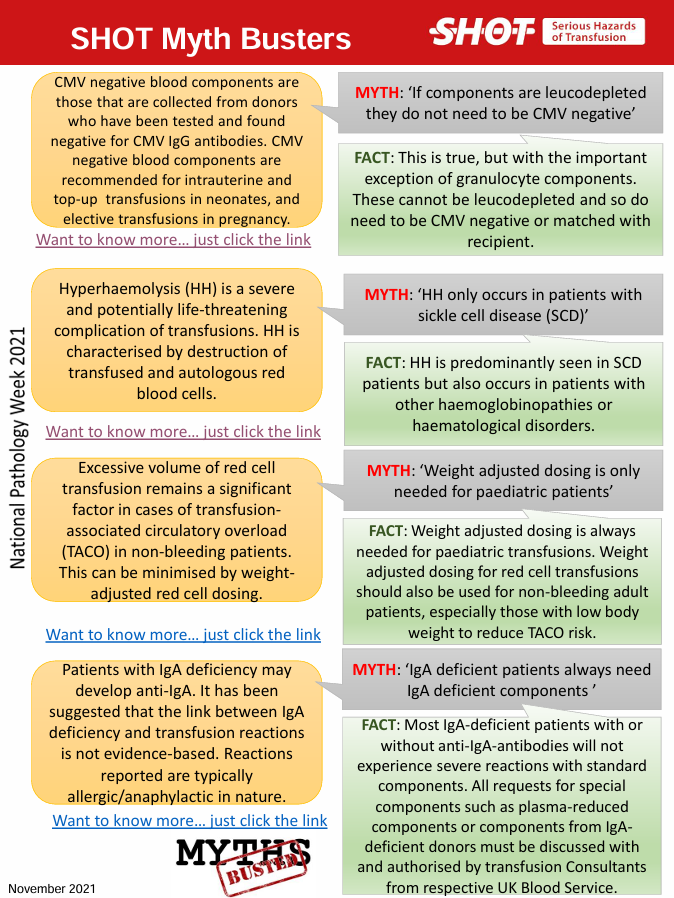
- If components are leucodepleted they do not need to be CMV negative
- HH only occurs in patients with sickle cell disease (SCD)
- Weight adjusted dosing is only needed for paediatric patients
- IgA deficient patients always need IgA deficient components

Myth buster 2
Myths
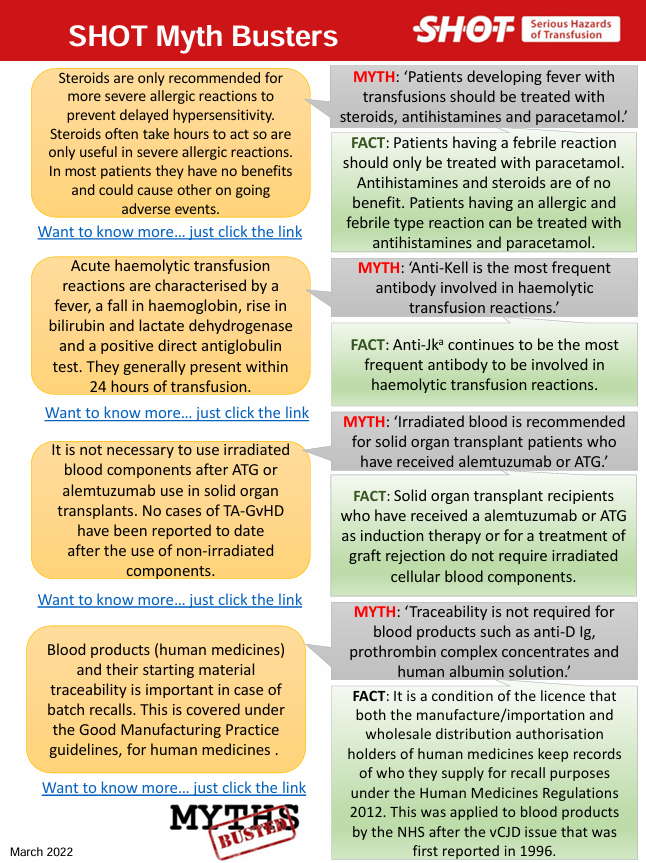
- Patients developing fever with transfusions should be treated with steroids, antihistamines and paracetamol
- Anti-Kell is the most frequent antibody involved in haemolytic transfusion reactions
- Irradiated blood is recommended for solid organ transplant patients who have received alemtuzumab or ATG
- Traceability is not required for blood products such as anti-D Ig, prothrombin complex concentrates and human albumin solution
Myth buster 3
Myths
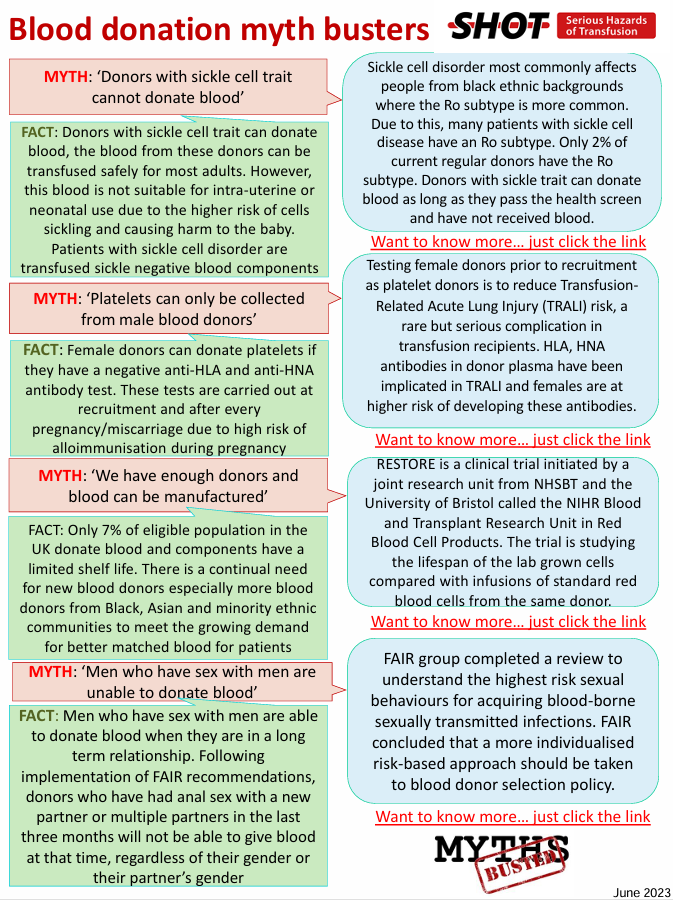
- Donors with sickle cell trait cannot donate blood
- Platelets can only be collected from male blood donors
- We have enough donors and blood can be manufactured
- Men who have sex with men are unable to donate blood
Myth buster 4
Myths
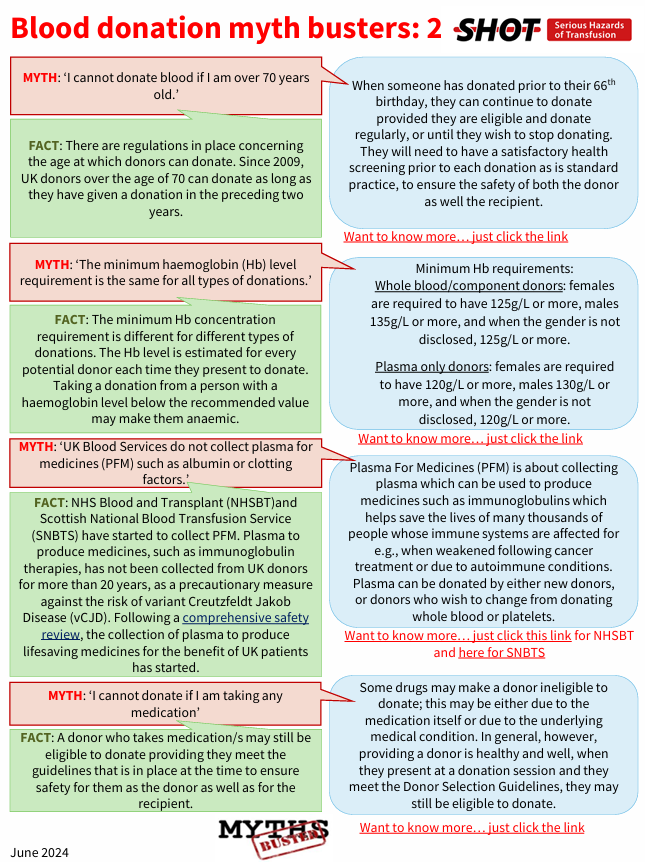
- I cannot donate blood if I am over 70 years old
- The minimum haemoglobin (Hb) level requirement is the same for all types of donations
- UK Blood Services do not collect plasma for medicines (PFM) such as albumin or clotting factors
- I cannot donate if I am taking any medication
Myth buster 5
Myths
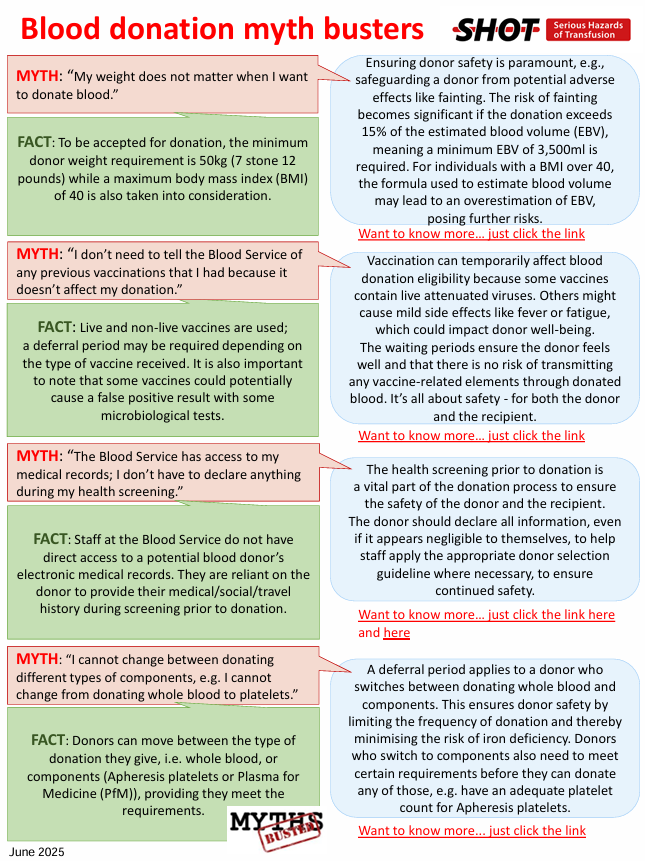
- My weight does not matter when I want to donate blood
- I don’t need to tell the Blood Service of any previous vaccinations that I had because it doesn’t affect my donation
- The Blood Service has access to my medical records; I don’t have to declare anything during my health screening
- I cannot change between donating different types of components, e.g. I cannot change from donating whole blood to platelets
Myth buster 6
Myths
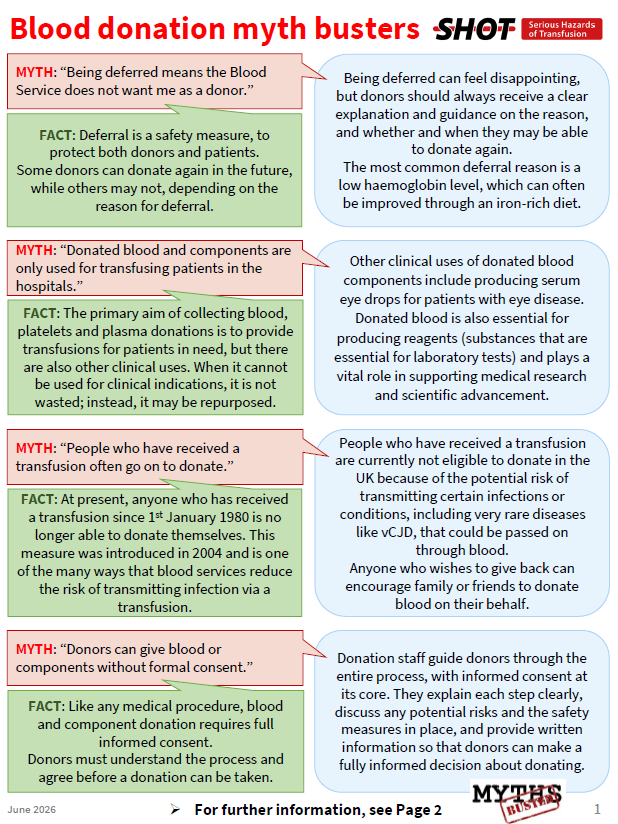
- Being deferred means the Blood Service does not want me as a donor
- Donated blood and components are only used for transfusing patients in the hospitals
- People who have received a transfusion often go on to donate
- Donors can give blood or components without formal consent