
Authors: Nicola Swarbrick, Victoria Tuckley and Claire Wroe
Link to PDF chapter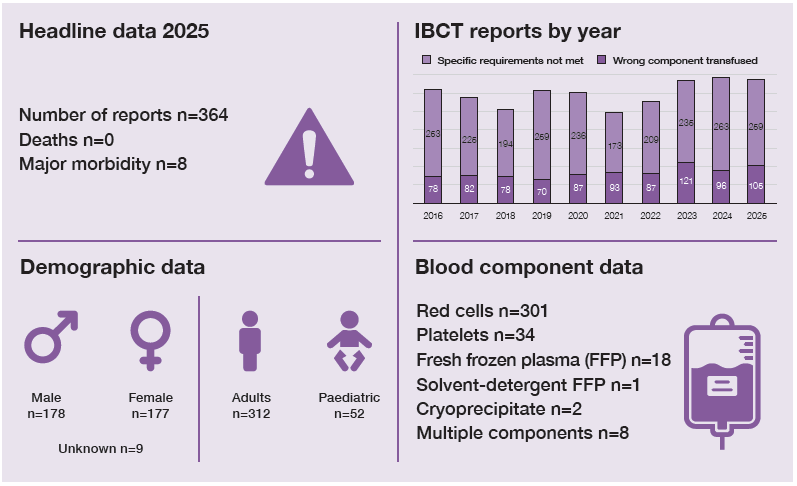
Key SHOT messages
Key findings
- There has been a large increase in ABO-incompatible (ABOi) red cell transfusions from 2024, all due to clinical errors.
- There was no change in the number of ABOi plasma transfusions due to laboratory errors.
- More patient harm has occurred from IBCT events than in 2024.
Gaps identified
- Collection and administration are weak points in ABOi red cell transfusion events.
- Communication gaps, insufficient skills and knowledge, and mismatches between workload and staffing levels continue to contribute to IBCT events.
- Lack of functionality within and interoperability between information technology (IT) systems.
Good practice
- Implementation of checklists helped identify and prevent IBCT events, including ABOi red cell transfusions.
- Introduction of IT for collection and administration steps identified errors prior to administration.
Next steps
- Implementation of the new SHOT pre-administration checklist may help strengthen safety checks.
Glossary, acknowledgments and reference list
Please access these links for the Glossary for all abbreviations, Acknowledgments and References used.
SHOT category definition
IBCT definition
Wrong component transfused (WCT)
Where a patient was transfused with a blood component of an incorrect blood group, or which
was intended for another patient and was incompatible with the recipient, which was intended
for another recipient but happened to be compatible with the recipient, or which was other than that prescribed e.g., platelets instead of red cells.
Specific requirements not met (SRNM)
Where a patient was transfused with a blood component that did not meet their specific transfusion requirements.
For a more detailed definition see SHOT Definitions
Introduction
These errors accounted for 364/4046 (9.0%) reports in 2025, which is similar to the previous year’s
data. The total number of IBCT-WCT reports has increased in 2025 to 105/364 (28.8%), from 96/359
(26.7%) in 2024. The total number of IBCT-SRNM reports has fallen slightly to 259/364 (71.2%), from
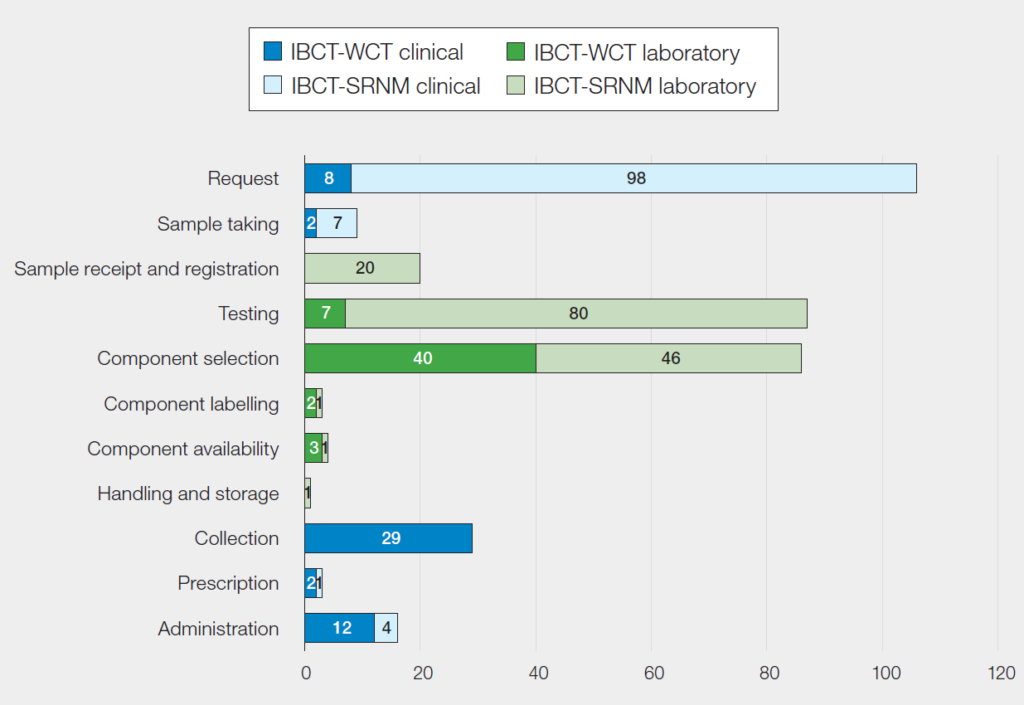
263/359 (73.3%) in 2024. Figure 10.1 provides an overview of reports submitted to SHOT in 2025 where an incorrect blood component was transfused, and Figure 10.2 outlines the step in the transfusion process where the error occurred.
Figure 10.1: Overview of reports where an incorrect blood component was transfused in 2025 (n=364)
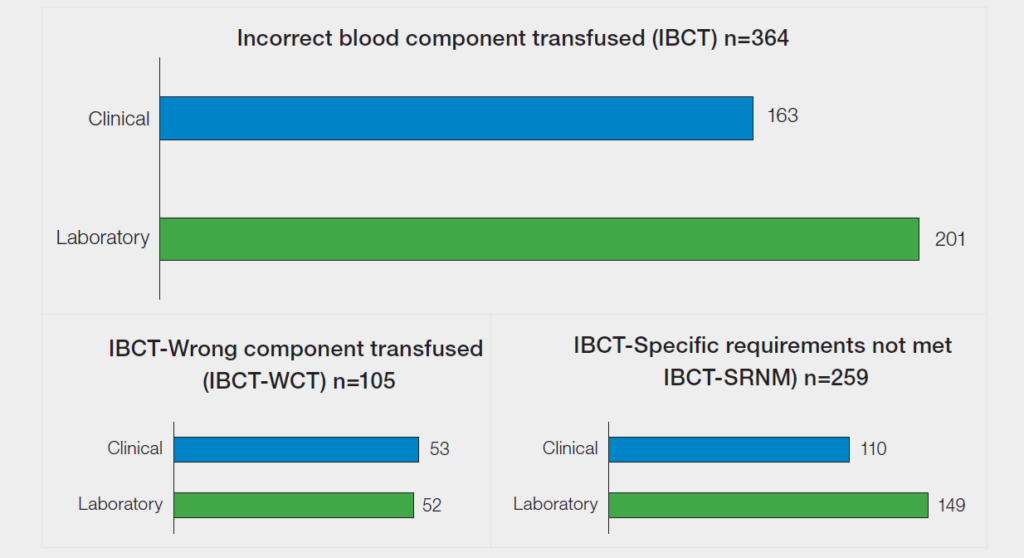
Figure 10.2: Total IBCT errors in 2025 categorised by the step in the transfusion process where
the primary error occurred (n=364)
5-year review of IBCT errors
There has been a continual rise in IBCT events reported over the last 5 years in line with the total numberof SHOT reports (Figure 10.3) as discussed in Swarbrick, et al., 2024. This has been mirrored by a gradual increase in reported patient harm (Figure 10.4).
Figure 10.3: Total IBCT events reported to SHOT 2021-2025
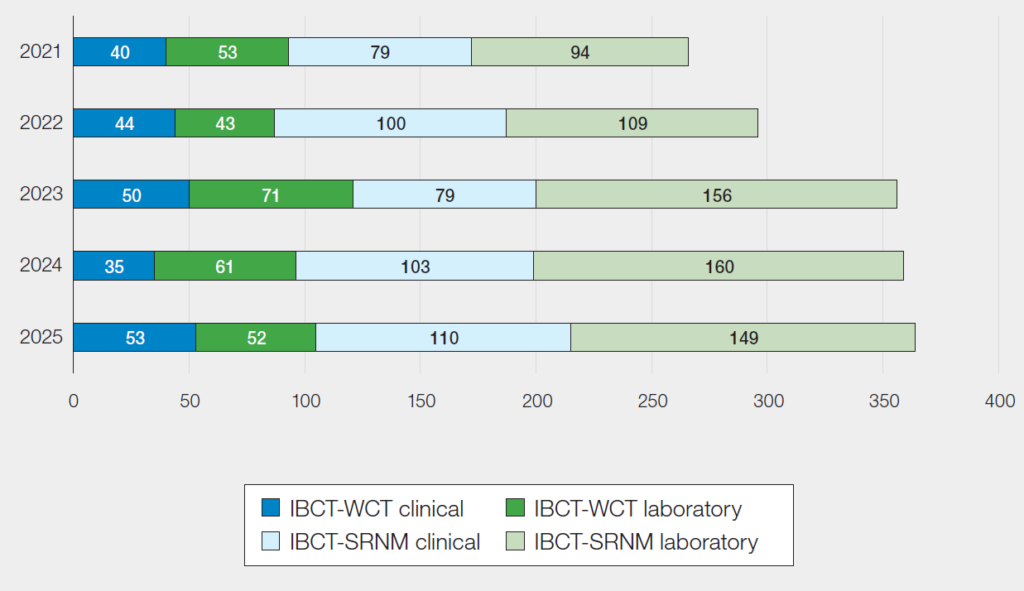
Figure 10.4: Impact of IBCT events on transfusion recipients related to major morbidity and
patient death 2021-2025
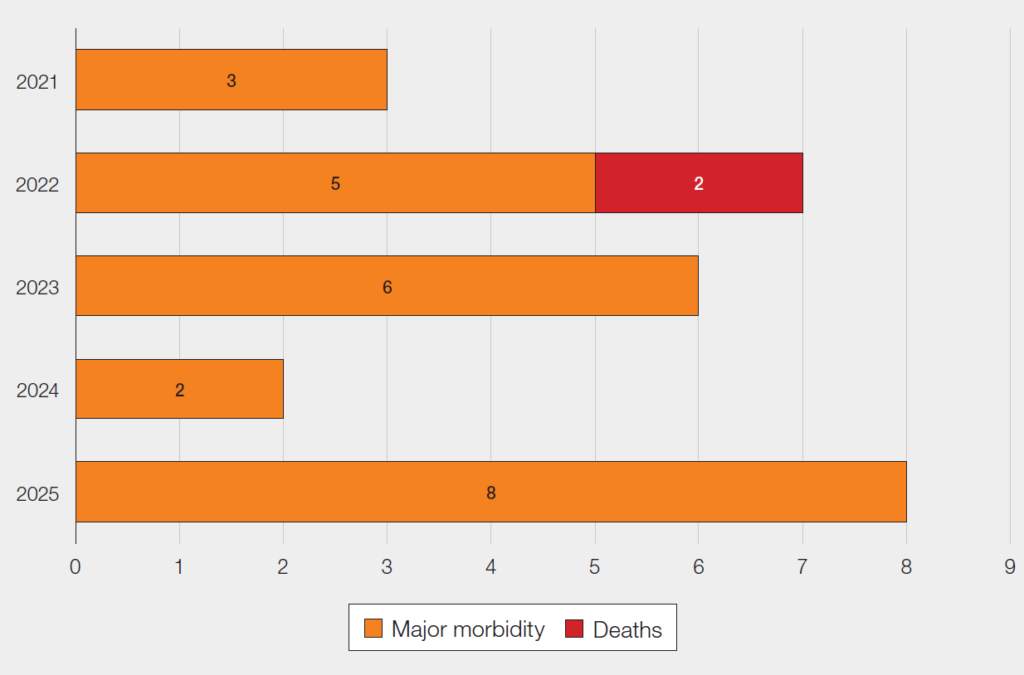
Deaths related to transfusion n=0
There were no deaths related to transfusion in the IBCT category in 2025.
Major morbidity n=8
There has been a rise in major morbidity cases due to IBCT errors in 2025 to 8; 6 due to IBCT-WCT
and 2 due to IBCT-SRNM. Four cases were due to errors in the laboratory, and 4 in the clinical area.
These cases included:
- Three cases of ABOi red cell transfusions where the patient required admission to the intensive care unit (ICU)/high dependency unit (HDU).
- Two cases of D-positive components transfused to D-negative women of childbearing potential
leading to sensitisation to the D-antigen. - Two cases of K-positive red cells transfused to K-negative women leading to sensitisation to the
K-antigen (see Case 10.9). - One case of ABO-compatible red cell transfusion to the incorrect patient which resulted in significant stress and anxiety requiring medical intervention (Case 10.1).
Case 10.1: Transfusion of ABO-compatible red cells to the wrong patient significantly impacts wellbeing
Patient 1 (A D-positive) received blood intended for patient 2 (O D-positive) who was located in the next bed, due to a lack of pre-administration checks. The unit was checked against paper handover notes in the ward’s treatment room and not by the patient’s side. The error was identified by the patient during administration, who immediately alerted the ward staff. Although the unit was ABO-compatible (group O red cells to a group A recipient), this event caused severe distress to the patient. They experienced an acute stress response requiring medical intervention including chlorphenamine, salbutamol, hydrocortisone and adrenaline. The patient made a full recovery.
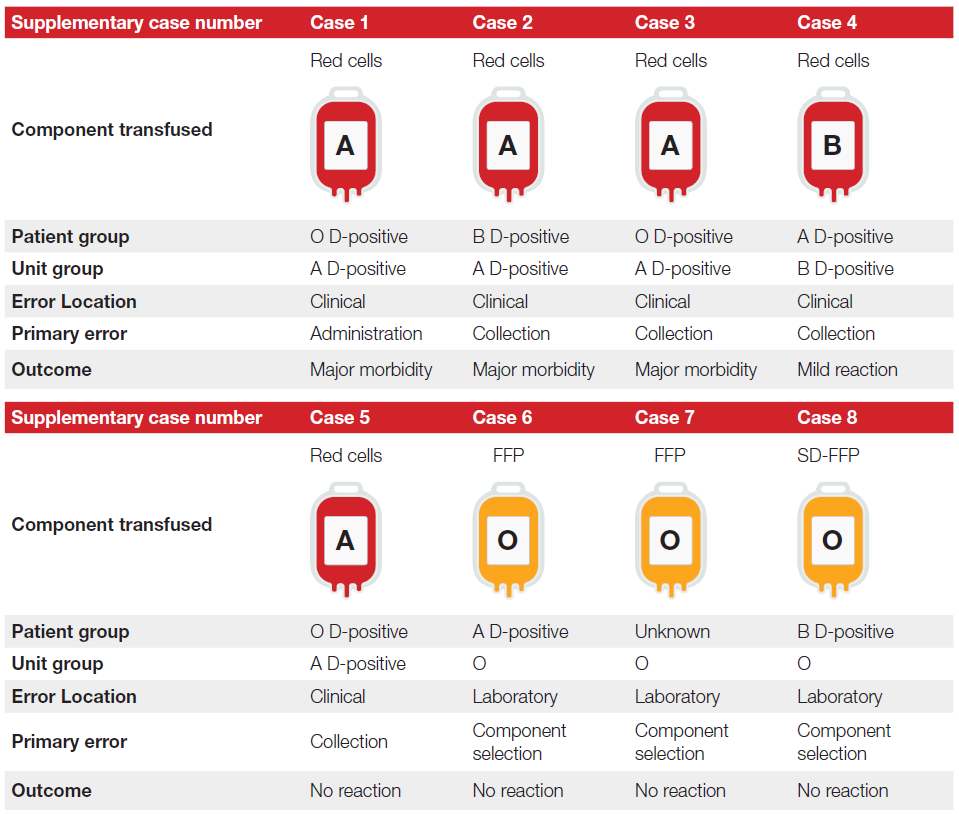
ABO-incompatible (ABOi) transfusions n=8
There were 8 ABOi transfusions in 2025: 5 red cell and 3 plasma transfusions (2 fresh frozen plasma
[FFP] and 1 solvent-detergent [SD]-FFP). All the red cell transfusions were related to clinical errors, and all plasma transfusions were related to errors in the laboratory. These cases highlighted weak points in the transfusion process at collection and administration in the clinical area, and component selection in the laboratory (Table 10.1). All cases of ABOi transfusion are described in detail in the supplementary information.
Table 10.1: ABOi transfusions reported in 2025 (n=8)
Case 10.2: Checking of units away from the patient led to two ABOi red cell transfusions
Patient 1 (A D-positive) and patient 2 (B D-positive) were on the same ward, both requiring a red cell transfusion. The nurses caring for these patients both placed a request for collection of one unit of red cells at similar times. The porter received these requests and although there was a one-unit collection policy in place, the porter thought it was acceptable to collect two units if they were for the same ward. Two units were collected and delivered to the ward by the porter. The two units were both checked at the nurse’s station away from the patient’s bedside. Both patients were wearing an identification band. Electronic vein-to-vein scanners were available as a second checker but not used during this event. The units were both administered to the wrong patients, patient 1 received patient 2’s and vice versa. Patient 1 quickly became acutely unwell, and an emergency call was placed for medical staff to urgently attend. At this point another member of staff stated that patient 2 was also unwell, prompting staff to check the label attached to the red cell unit still running for patient 1, and the error was identified. The clinical staff split into two teams to deal with both patients receiving ABOi transfusions. Patient 1 required urgent admission to the ICU and underwent haemofiltration, where they stayed until discharged 9 days later. Patient 2 experienced minor morbidity, with tachycardia, pyrexia and tachypnea and recovered.
There were extensive corrective actions for portering staff, and all staff in the clinical areas received refresher training in using the electronic blood management bedside tracking system for transfusion.
Clinical IBCT errors n=163
Of the 364 IBCT cases reported to SHOT in 2025, 163 were due to errors in the clinical area (44.8%),
which is a marked increase from 138/359 (38.4%) in 2024.
Clinical IBCT-WCT errors n=53
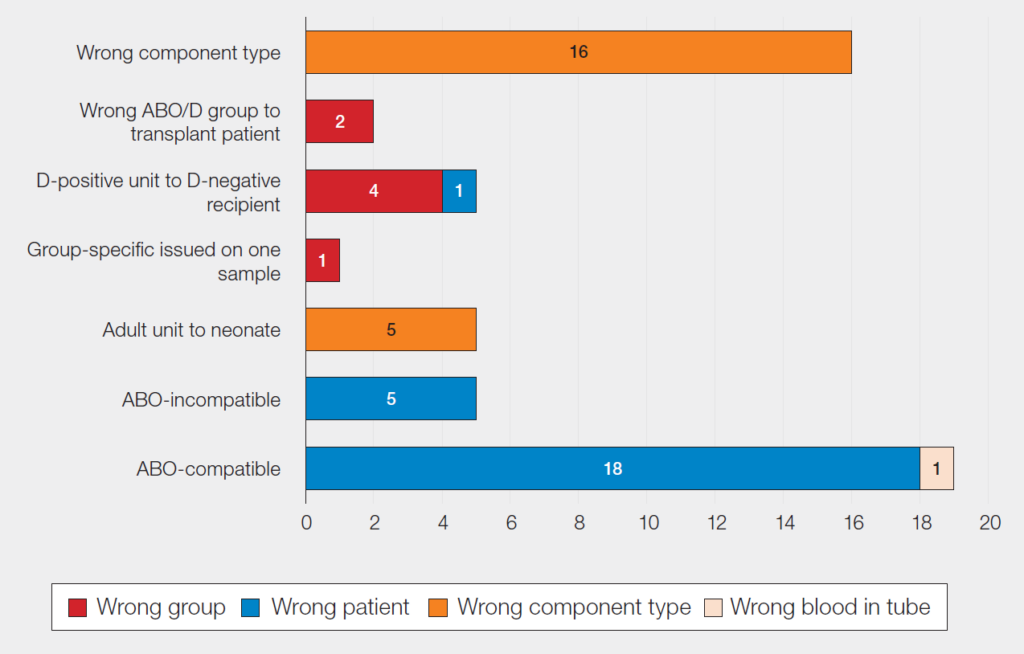
There has been an increase in clinical errors reported from 35 in 2024 to 53 in 2025. Of these, 24/53
(45.3%) were transfusions to the wrong patient, 21/53 (39.6%) were the wrong component type (see
Case 10.3), 7/53 (13.2%) were the wrong blood group, and 1 wrong blood in tube event where the
patient was issued ABO/D compatible platelets (Figure 10.5).
Clinical steps in the transfusion process that were most prone to IBCT-WCT errors were collection,
29/53 (54.7%), administration, 12/53 (22.6%) and request, 8/53 (15.1%). Four collection errors and 1
administration error led to ABOi red cell transfusions, of which 3 resulted in major morbidity in the patient (as discussed in Case 10.2). One additional administration error led to major morbidity with the patient requiring clinical intervention (as discussed in Case 10.1).
Figure 10.5: Clinical IBCT-WCT errors by category in 2025 (n=53)
The majority of clinical IBCT-WCT events occurred on wards, 25/53 (47.2%), emergency departments,
14/53 (26.4%) and intensive care units, 4/53 (7.6%).
Of the clinical IBCT-WCT events, 29/53 (54.7%) occurred during urgent or emergency transfusions,
and 18/53 (34.0%) were routine. Collection errors mainly occurred during urgent/emergency cases,
17/29 (58.6%).
Pre-administration checklists were used in 31/53 (58.5%) IBCT-WCT events; 14 electronic and 17
paper versions, yet failed to detect the error. There were 15/53 (28.3%) that did not use the local pre-administration checklist, and 1 case stated a checklist was not used in their organisation.
IT was used to collect blood components in 13/29 (44.8%) collection errors, 9 used a paper collection
system, and 7 did not state the collection method.
When asked what was used to check the unit against at pre-administration, there were 35/53 (66.0%)
responses; only 12 checked against the identification band, 12 against the prescription/authorisation
chart, and 15 stated the unit was not checked against any documentation or identification band.
Case 10.3: Wrong component collected and administered without completing the correct checking procedures
One unit of red cells was collected by two registered nurses without any collection paperwork. The incorrect unit was collected and taken to the ward where it was checked by the same staff against another patient’s prescription/authorisation chart in the clinical room away from the patient. They did not check the unit against the identification band, or verbally with the patient. Following completion the patient became unwell but this was thought to be due to their clinical condition as the unit was ABO-compatible (O D-positive to A D-negative).
The investigation stated that the night staff were tired and rushing to complete tasks before the day staff arrived to help alleviate pressure on the day shift. Also, the transfusion was not urgent and did not require overnight transfusion.
Learning points
- Collection and administration steps are weak points in the transfusion pathway.
- Pre-administration checks at the patient’s side are the final point to detect and prevent wrong components being administered.
- Assumptions and rushing during collection and pre-administration checks can lead to patient harm.
Clinical IBCT-SRNM errors n=110
There has been a continued increase in the number of clinical errors to 110 in 2025 from 103 in 2024.
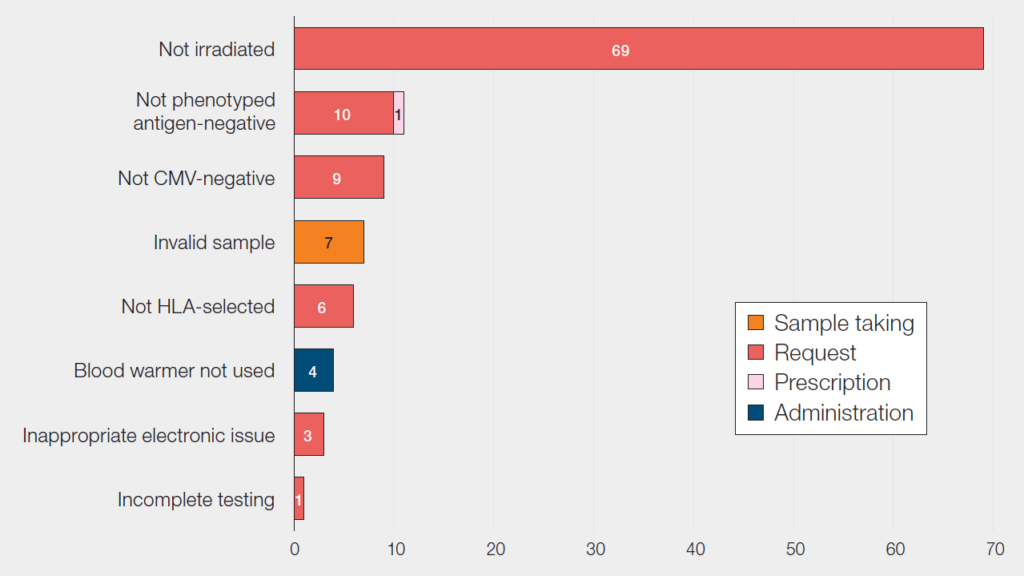
Of these, 98/110 (89.1%) were due to errors at the request stage of the transfusion, with 69/98 (70.4%)
resulting in patients not receiving irradiated components when required, (Figure 10.6), of which 26/69
(37.7%) impacted patients with Hodgkin lymphoma.
Other clinical errors resulted in patients not receiving phenotyped units in 11 cases, cytomegalovirus
(CMV)-negative not issued when required in 9, using an invalid sample for crossmatching in 7 (of which 3 were expired sample tubes), and not meeting human leucocyte antigen (HLA)-selection requirements in 6 cases.
Of the 98 errors at the request stage, 69/98 (70.4%) reports indicated the prescription/authorisation
did not state the specific requirement. Of these errors, 47/98 (48.0%) stated that inadequate written or verbal communication worsened the situation, 34/98 (34.7%) included shared-care teams, and 36/98 (36.7%) stated there were gaps in staff knowledge or skills for this task.
Pre-administration checklists had been used in 80/110 (72.7%) reports, but failed to detect the error.
Of the 24 who gave a reason why the checklist failed, this was mainly due to the requirement not being requested by the prescriber in 16 cases, or records not being updated in 2.
Figure 10.6: Clinical IBCT-SRNM errors and transfusion step where the error occurred in 2025
(n=110)
Case 10.4: Wrong blood in tube event leads to transfusion of multiple units of platelets not meeting patient’s requirements
A patient with platelet refractoriness, haematuria, and renal obstruction was transfused over 20 units of apheresis platelets. Initial HLA antibody testing and subsequent human platelet antigen (HPA) testing were negative, despite ongoing clinical suspicion of the presence of HLA antibodies. Repeat testing identified multiple HLA antibodies with a completely different HLA type, confirming the previous sample was from another patient. The patient received over 20 units of standard platelets over several weeks, not HLA-selected.
Although this was not determined to have impacted on the patient’s wellbeing, this could easily have had a greater impact, leaving the patient susceptible to bleeding episodes.
Case 10.5: Patient received 25 blood components not meeting irradiation requirements due to gaps in communication
An older child with acute myeloid leukaemia (AML) was being treated with fludarabine, and required irradiated blood components. This information was not communicated to the transfusion laboratory and the patient received 13 red cells and 12 adult therapeutic doses of platelets, which were not irradiated.
This patient had been admitted to intensive care rather than a haematology ward. When the laboratory staff reviewed the pharmacy system the error was identified, highlighting 25 missed opportunities for the clinical team to inform the laboratory.
Learning point
- Clear, timely communication for all specific requirements is essential.
- Knowledge of the impact of not meeting specific requirements should be included in all transfusion training.
Contributory factors to clinical IBCT errors
Figure 10.7: Contributory factors to clinical IBCT errors (n=163)
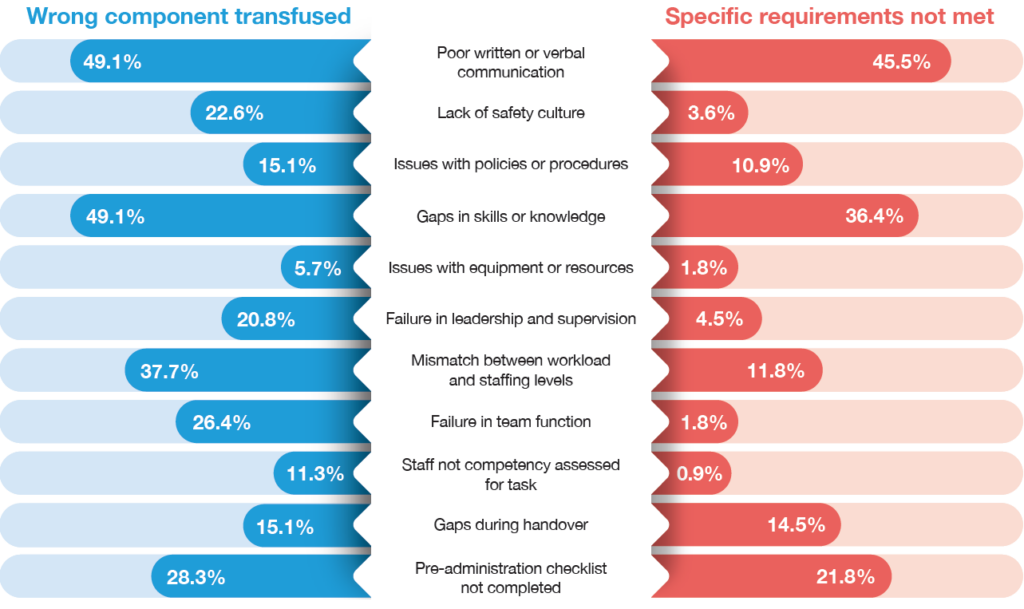
Key findings in the clinical area included inadequate written and verbal communication, and gaps in staff skills and knowledge. Other areas of concern included the mismatch of workload to staffing levels, failure in team function, leadership and supervision, gaps at handover and lack of safety culture. Pre-administration checklists, which have the potential to detect IBCT errors, were not completed in over a quarter of cases.
Laboratory IBCT errors n=201
There has been a slight reduction in laboratory IBCT errors in 2025 from 221 in 2024 to 201 in 2025.
These reductions are reflected in both IBCT-WCT errors (52 in 2025 down from 61 in 2024) and IBCTSRNM (149 in 2025 down from 160 in 2024).
Laboratory IBCT-WCT errors n=52
There were 52 laboratory IBCT-WCT errors, with the most common error occurring at the component
selection step, 40/52 (76.9%) (Figure 10.8). Two of these errors resulted in major morbidity in the patient, both involving the transfusion of D-positive units to D-negative females of childbearing potential resulting in development of anti-D, and 2 errors resulted in ABOi plasma transfusions.
Figure 10.8: Laboratory IBCT-WCT errors by transfusion step in 2025 (n=52)
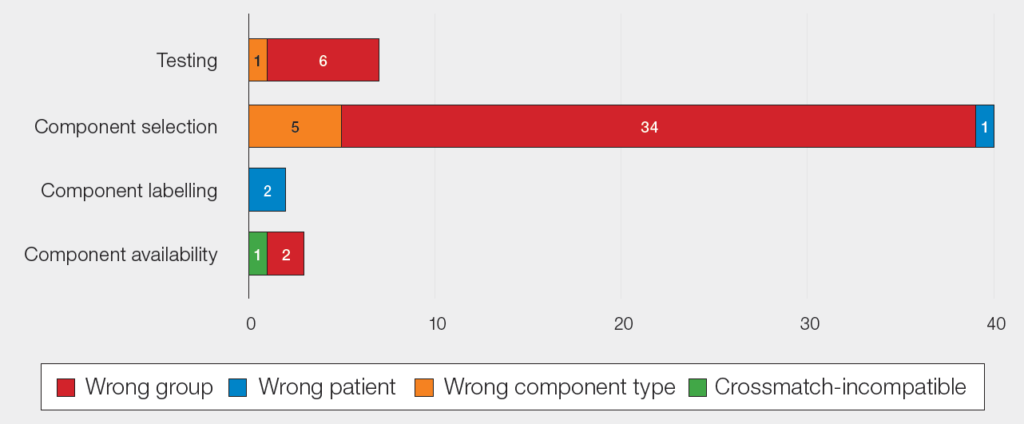
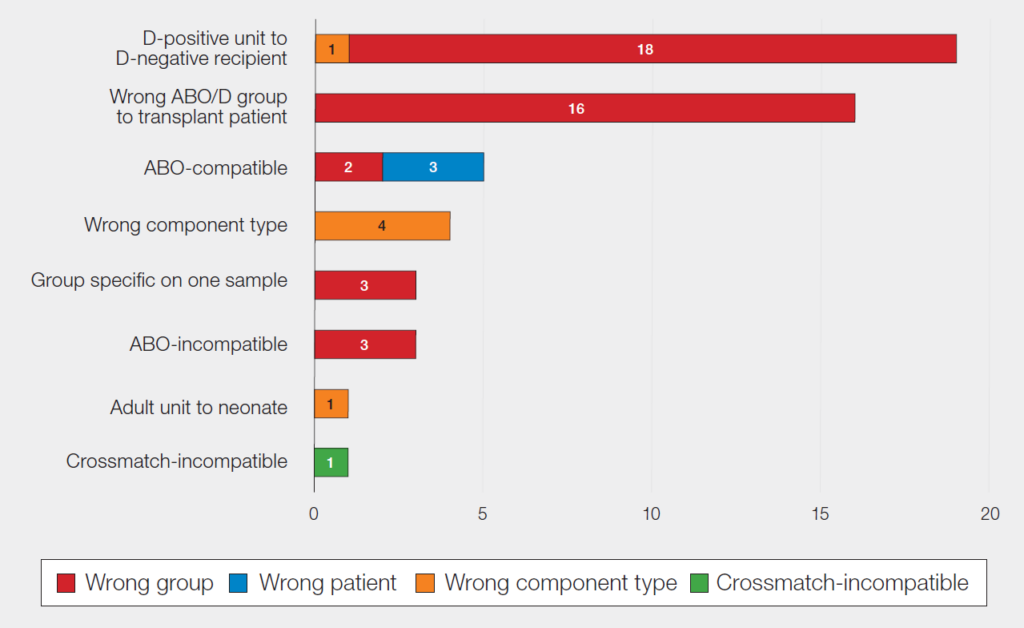
Figure 10.9: Laboratory IBCT-WCT error by category in 2025 (n=52)
Wrong group errors n=42
There were 42 wrong group errors in 2025, of which 18/42 (42.9%) resulted in D-positive units being
transfused to D-negative patients, and 16/42 (38.1%) wrong ABO/D group components to transplant
patients, both solid organ and haemopoietic stem cell transplant (HSCT) (Figure 10.9). Of the 42 wrong group events, 34 were due to errors at component selection (Figure 10.8).
Laboratory errors also resulted in 5 additional wrong group transfusions which were ABO-compatible
but still incorrect, 4 wrong component types being issued, and 3 ABOi transfusions due to issue of
group O plasma to non-O patients.
IT was involved in 38/42 (90.5%) wrong group laboratory errors which included not updating, not
heeding, or not using flags, alerts and logic rules, 17/38 (44.7%) and lack of IT functionality or algorithms to support safe practice in 13/38 (34.2%).
Of the 52 laboratory IBCT-WCT events, 14/52 (26.9%) stated that there was a mismatch between
staffing levels and workload.
Case 10.6: Renal transplant delayed due to issue of incorrect ABO group plasma
A male patient was due to have an ABOi directed kidney transplant following a course of plasma exchange to remove circulating anti-B antibodies. The patient was prescribed four units of group AB FFP to replace depleted clotting factors following exchange, but was issued group O in error by the transfusion laboratory. Although compatible with the patient, this increased the anti-B titre beyond acceptable limits and the transplant was aborted after donor surgery had already begun. The transplant was re-scheduled a week later.
The investigation identified that gaps in communication between clinical and laboratory teams contributed to this event. The biomedical scientist (BMS) issuing the FFP was lone working due to staffing availability, and was also dealing with a massive haemorrhage situation. The BMS stated they were suffering from fatigue following multiple consecutive night shifts. A comment added to the notes section of the laboratory information management system (LIMS) about the ABO component requirements was not prominent and therefore was missed by the BMS.
Case 10.7: Wrong ABO group red cells transfused to HSCT recipient due to laboratory interpretation errors and missed LIMS alerts
A group A D-positive AML patient received an O D-negative HSCT. A group and screen test was
undertaken following a request for a unit of red cells due to haematuria and a low haemoglobin (Hb). The grouping results gave mixed field results in the anti-A and anti-D wells in the grouping cassette but the BMS mistakenly assumed this discrepancy was due to the patient receiving O D-negative red cells. There was a note available on the LIMS to state the patient was a transplant recipient and should receive group O red cells, but this was missed and one unit of A D-positive red cells was issued and transfused.
Learning points
- Clear, understandable IT alerts and logic rules can prevent wrong component transfused events.
- Alerts should not be easily overridden or optional to review. When actioned, this should require acknowledgement, which should be auditable.
Laboratory IBCT-SRNM errors n=149
There were 149 laboratory errors which led to patients receiving blood components that did not meet
their specific requirements. Most were due to testing errors, 80/149 (53.7%) and component selection
errors, 46/149 (30.9%). Two laboratory IBCT-SRNM errors led to major morbidity in patients due to the
issue of K-positive red cells to women of childbearing potential who later developed anti-K.
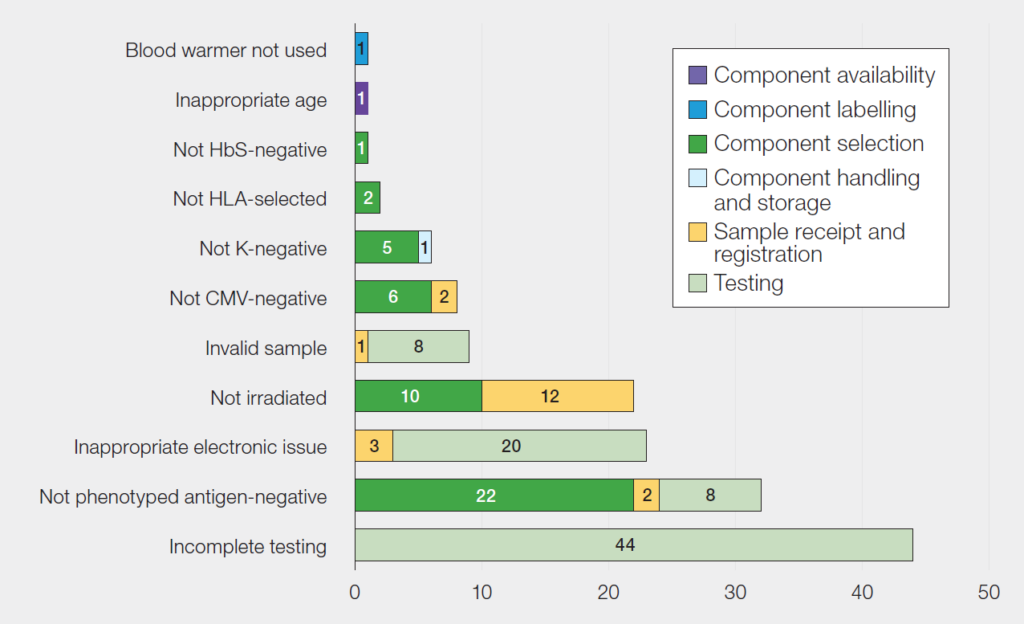
Figure 10.10: Laboratory IBCT-SRNM errors by transfusion step in 2025 (n=149)
Testing errors n=80
There were 80 laboratory testing errors which included 44/80 (55.0%) events of incomplete testing,
20/80 (25.0%) episodes of inappropriate electronic issue of red cells, 8/80 (10.0%) use of an invalid
sample, and 8/80 (10.0%) errors related to incorrect antibody/antigen determination resulting in incorrect phenotyped units being issued. Of the incomplete testing, 17/44 (38.6%) errors were related to antibody identification investigations. Other cases included group testing errors, crossmatch result errors, and internal quality control testing errors.
Case 10.8: Laboratory testing errors and incorrect antibody identification
A patient with liver cirrhosis in the ICU required a unit of red cells due to a low Hb. The group
and screen sample gave a weakly positive reaction in one of the screening cells. Further antibody investigations were incorrectly interpreted by the BMS as a non-specific antibody. The BMS crossmatched a standard unit, and soon after the transfusion commenced the patient became symptomatic with a transfusion reaction. A second check of the panel indicated the presence of anti-Jkb reacting with homozygous cells only. The patient died of their underlying clinical diagnosis prior to further investigations.
Contributory factors included that the request was from critical care and deemed urgent; the antibody investigations had required manual testing; there were several other urgent transfusion requests; and the BMS was lone working in blood transfusion. The local policy contained guidance on the use of two cells for antibody exclusion, but this was not followed.
Component selection n=46
Component selection errors included not meeting the required phenotype, 22/46 (47.8%), not irradiated, 10/46 (21.7%), not CMV-negative, 6/46 (13.0%), K-positive units to patients of childbearing potential, 5/46 (10.9%), 2 of which resulted in sensitisation to the K-antigen (see Case 10.9), not HLA-selected, 2/46 (4.3%) and not HbS-negative, 1/46 (2.2%).
Case 10.9: Patient develops anti-K due to laboratory error impacting the decision not to have further children
The transfusion laboratory issued two units of red cells to a patient post elective caesarean section, one of which was K-positive. During antenatal testing in a subsequent pregnancy, anti-K was detected. As a result of the antibody development, the patient decided not to have any further children, as the antibody may impact future pregnancies. The patient made a formal complaint to the organisation regarding the personal impact of the event.
The BMS had worked several additional shifts during this period due to low staffing numbers, and fatigue was identified as a contributory factor, as well as knowledge gaps.
Learning point
- Transfusion laboratory errors can have serious consequences for patients, with testing and component selection being particular weak points in the pathway.
Contributory factors to laboratory IBCT errors
Figure 10.11: Contributory factors to laboratory IBCT errors (n=201)
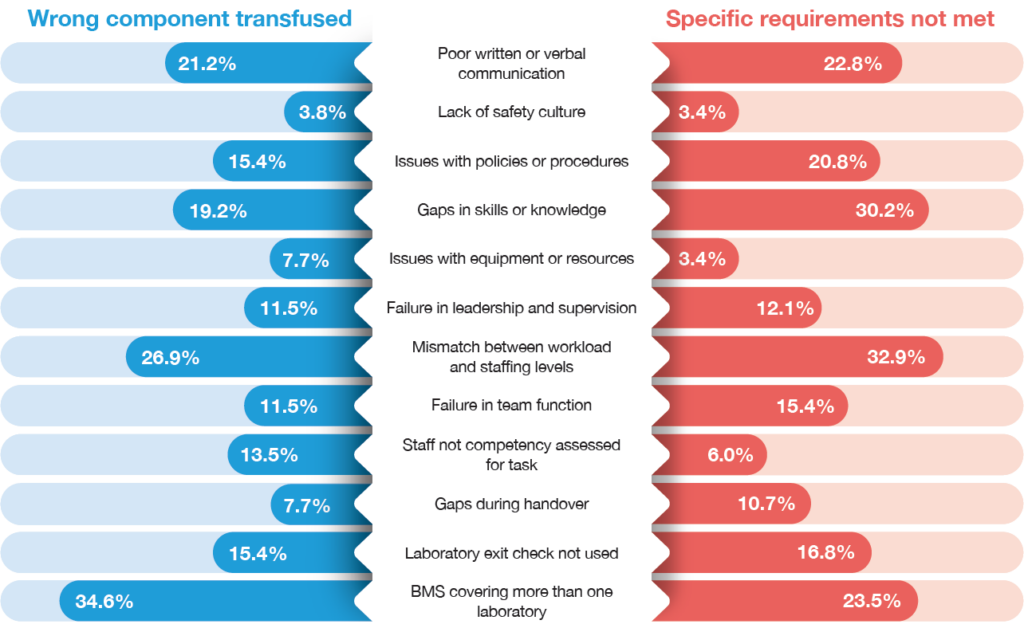
Key findings in laboratory errors included mismatch between workloads and staffing levels and gaps in staff skills and knowledge. Issues with policies and procedures, incomplete competency assessment for the task, and failures in team function, leadership and supervision also contributed to errors. Laboratory exit checks, which have the potential to detect laboratory errors, were not used in a third of cases.
Near miss (NM) IBCT n=157
There were 157 NM IBCT events in 2025; 105 NM IBCT-WCT errors and 52 NM IBCT-SRNM events.
NM IBCT-WCT n=105
There were 105 NM IBCT-WCT events in 2025, due to 68 clinical and 37 laboratory errors.
The majority of clinical errors occurred at the collection stage, 52/68 (76.5%), and 15/68 (22.1%) at
administration. Clinical errors would have resulted in transfusion of the wrong patient (either wrong patient transfused, or wrong unit transfused to the intended patient) in 60/68 (88.2%) cases.
The majority of laboratory errors occurred at the component selection step, 18/37 (48.7%) or the availability step, 10/37 (27.0%). Laboratory errors were mainly due to selection of the wrong group, or issue of units to the wrong patient.
NM IBCT-WCT events nearly resulted in 77 wrong patients being transfused, which would have led to 57/77 ABO-compatible, 19 ABOi transfusions and 1 D-mismatch. One further ABOi due to the laboratory issuing the wrong component group was also identified before transfusion, giving a total of 20 ABOi NM events.
Most, 72/105 (68.6%) NM IBCT-WCT events were detected during pre-administration checking, of which 50/72 (69.4%) were detected using a formal checklist.
In 31/105 (29.5%) events reporters stated that IT could have prevented the event but was not in place,
mainly due to lack of funding for implementation or lack of functionality in existing systems.
Case 10.10: Lack of IT interoperability leads to IT workaround and collection errors
A unit of red cells was required for patient A, a request was placed in the electronic portering
system, and a collection slip printed. The patient information details of an incorrect patient were cut and pasted from the portering requesting system into the collection slip form. The incorrect unit was collected and taken to the clinical area. The unit was spiked for transfusion, but the error was identified prior to pre-adminstration checks.
This error had occurred on previous occasions. Lack of IT interoperability and reduced staffing levels after 16:00 were highlighted as contributory factors.
Case 10.11: Lack of LIMS functionality and IT alert fatigue lead to component selection errors
A group A D-positive patient had received an A D-negative HSCT, and their LIMS record was updated with two flags to state ‘do not issue D-positive platelets’ and ‘do not issue group O platelets’. A unit of A D-positive platelets was issued from the laboratory, with both warning flags being acknowledged by the BMS but not actioned. A laboratory exit checklist had been completed but the error was not identified. The error was identified during pre-administration checks.
Alert fatigue and lack of LIMS functionality managing transplant patients were identified as contributing factors. In addition, the standard operating procedure (SOP) relating to transplant patients had not been shared with the BMS, and this topic was also not detailed in the competency assessment documentation.
NM IBCT-SRNM n=52
There were 52 NM IBCT-SRNM events in 2025, due to 41 laboratory and 11 clinical errors.
The majority of laboratory errors occurred at the component selection step, 27/41 (65.9%), and sample receipt and registration stage, 8/41 (19.5%). Laboratory errors resulted in 22 patients being issued nonirradiated units when required. Other missed requirements included not CMV-negative in 5 cases, not phenotype-matched in 2, and not HLA-selected in 2.
All 11 clinical errors occurred at the request step, of which 7 resulted in the issue of non-irradiated units when required.
NM IBCT-SRNM errors were detected at the pre-administration stage in 35/52 (67.3%) cases. A formal
checklist detected 29 of these events.
Conclusion
IBCT errors, both clinical and laboratory, continue to impact patients and are associated with increasing levels of harm. Although the collection and administration stages of the transfusion pathway offer multiple opportunities to identify and prevent these errors, they are failing to do so at an increasing rate. IT systems are designed to address these gaps however, issues with system functionality, alongside insufficient training and knowledge, can introduce new risks. Fundamental steps in patient identification such as performing pre-transfusion checks and verifying identification bands at the point of administration are still being omitted. It is essential to understand the underlying reasons for these omissions when investigating IBCT events and NM. Reports highlight factors such as inadequate communication (both written and verbal), gaps in staff knowledge and skills, and workload pressures relative to staffing levels, all of which contribute to errors and negatively impact patient wellbeing.
Preventive measures, including IT systems and structured checklists, have proven effective in reducing many IBCT errors. However, when these tools are not used correctly, or when identified issues are not escalated or acted upon, the risk of patient harm persists. Strengthening these systems and ensuring staff understand not only how to use them but also why each step matters is essential for sustained improvement.