
This guidance document aims to provide helpful tips for successfully including electronic systems in major haemorrhage simulations.
MH Simulation creating mock patients
Using mock patients for MH simulations
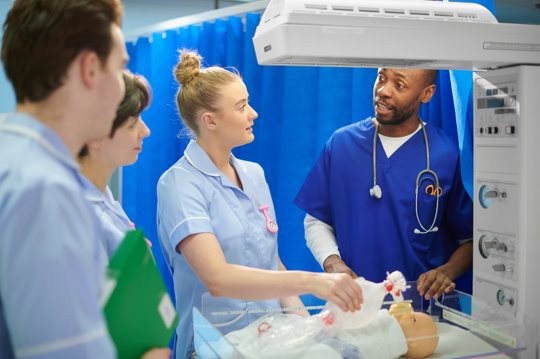

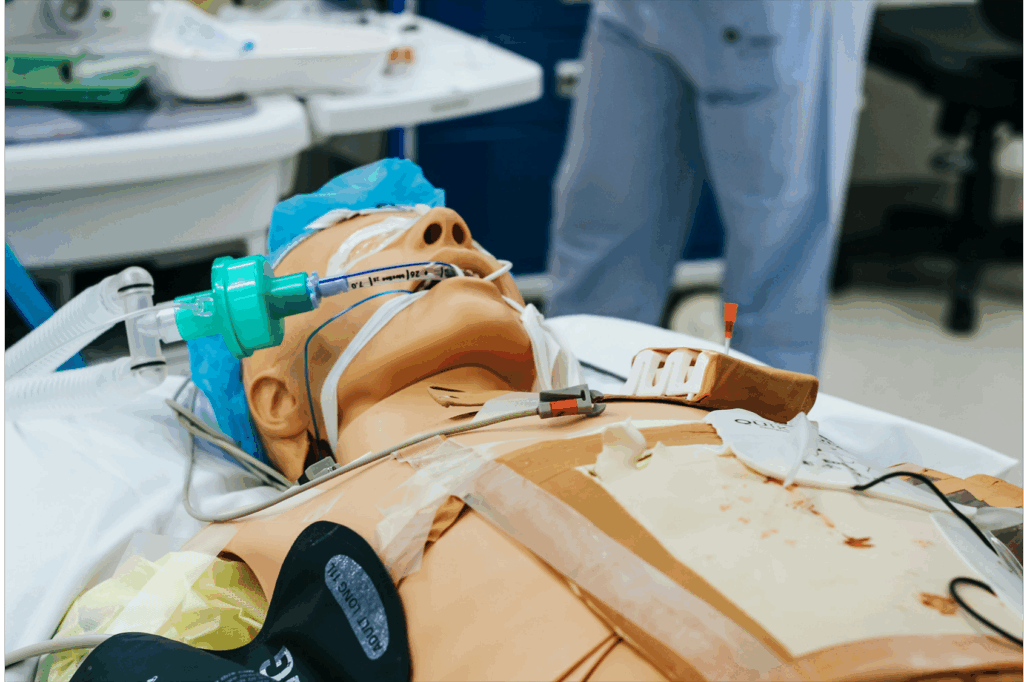
For major haemorrhage simulations it is good practice to incorporate all aspects of the transfusion pathway. For organisations that use electronic blood management systems (EBMS) and electronic patient records/order comms systems (EPR/OCS), it can be challenging including these systems in the simulation. This guidance document aims to provide helpful tips for successfully including electronic systems in major haemorrhage simulations.
In order to use the electronic systems for the simulation in the same way that they would be used for a real event, test systems need to be set up in advance, particularly for Laboratory Information Systems (LIMS) and EBMS where blood components need to be made available for use. Advance agreement of ‘mock patient’ identification and blood components to be made available is key to success, last minute changes may be difficult for the laboratory to accommodate. It is acknowledged that availability and interoperability of electronic systems varies across organisations and so this document can be adapted according to local requirements.
Electronic systems may be used in the simulation for all or any of the following
- Pre-hospital provision of blood components
- Patient admission and ID band generation
- Test, blood component and product orders to LIMS
- Sample labelling
- Sample testing, result reporting, component and product labelling and release
- Point of care devices
- Component/product storage and collection
- Component/product arrival at clinical area
- Component/product administration to the patient
General considerations
- Ensure relevant staff have access to all the test modes of electronic systems being used for the simulation. It may be necessary to use a device configured for test systems rather than using a device that would normally be used in the clinical area, if the simulation not being performed in a dedicated simulation suite
- Staff ID badge barcodes used for access to production systems may not work for test systems, consider whether designated ‘simulation’ access badges are needed for relevant access to electronic systems
- Test systems should mirror configuration and functionality of the production/live system
- Agreement is required for mock patient identification (surname, forename, date of birth, hospital number, NHS/CHI number) being used for the simulation so that this can be replicated in all electronic systems being used. Simulation patient may not have NHS/CHI number (as for real patients) and so the electronic systems must function without this information
- Ensure interfaces are active between electronic test systems prior to the simulation Agree the number and type of components/products to be made available for the patient, including emergency issue and for named patients
- Agree personnel attending/supporting the simulation (see Simulation Scenarios for information). Organisations may have dedicated simulation suites, or simulations may take place in the clinical area. Laboratories tend not to have dedicated simulation areas
- At the end of the simulation ensure that systems are returned to production/live mode where applicable
EPR/Order comms
- There needs to be a decision as to whether the ‘mock patient’ is to be known or unknown to the system
- Ensure patient ID bands can be printed from the test system
- Ensure sample labels can be printed from EPR/order comms test system if applicable
Laboratory Information Management System (LIMS)
- Ensure adequate numbers of blood components and products are available in the test system, where possible give components a long expiry so that they can be reused
- Check if the ‘mock patient’ needs any specific requirements, e.g., K negative for childbearing potential. Unless specifically including concessionary release process within the simulation use components that meet the specific requirements
- It is unlikely that an end-to-end simulation will cover all aspects of the laboratory pathway. Actual sample testing may not be possible, including use of an analyser system. Laboratories should ensure that MH practice is included in staff training and regular competency assessment
Electronic Blood Management System (EBMS)
- If using smart blood fridges (e.g., Haemobanks) for simulation purposes ensure that these are configured such that there are designated drawers for test purposes that do not impact on drawers that may be used for real patient units
- Ensure designated blood fridge to be used for the simulation can be switched from production to test when required. This may require an individual to be stationed at the fridge for parts of the simulation process, e.g., collection of units by clinical team
- Ensure PDA or PC devices being used for the simulation are connected to the WIFI and can be switched to test mode, or training mode as applicable
- Ensure pick-up slips can be printed from the device to be used in the clinical area
- Where components are used in the administration process and fated as transfused, is there a process for reinstating these as available for future use
- Ensure all components are returned to available status at the end of the simulation so that they can be used for future simulations
- Where FFP and cryoprecipitate are used and the LIMS/EBMS has amended the expiry date, can this be adjusted in the test system for future use